


बारावी भूगोल प्राथमिक आर्थिक क्रिया प्रकरणावरील टिपा लिहा
Prathamik Arthik Kriya Tipa Liha
How to solve the question Write Notes
Marathi and English Medium
1) मळयाची शेती alobet giriş
2) मासेमारी व प्राकृतिक घटक-
3) व्यापारी तत्वारील लाकूडतोड व्यवसाय
4) शिकार व परिस्थेचा ऱ्हास
Prathamik Arthik Kriya Tipa Liha
प्राथमिक आर्थिक क्रिया प्रकरणावरील टिपा लिहा
1) मळयाची शेती-
जी शेती उष्ण कटींबधीय घनदाट अरण्याच्या व विरळ लोकवस्तीच्या प्रदेशातील डोंगराळ भागात मोठया आकाराच्या शेतजमीनीत कृषी तज्ञाच्या मार्गदर्शनाखाली शास्त्रीय पध्दतीने,ठी भांडवल गुंतवणूक करुन, तेथील भौगोलिक स्थिती ज्या पिकास पोषक आहे अशा एकाच पिकाची लागवड करुन जी शेती व्यापार व निर्यात करण्याच्या उद्देशाने केली जाते त्या शेतीस “मळयाची शेती” असे म्हणतात.
① शेताचा आकार मोठा– या शेतीत शेतांचा आकारा मोठा असतो साधारण पणे 40 ते 400 हेक्टर पर्यन्त आकार असु शकतो.
② भांडवल पुरवठा – मळयाच्या शेती करिता मोठया प्रमाणात भांडवल गुंतवणूक आवश्यक असते. या शेतीत मूलभूत सा व पिकांच्या देखभालीचा खर्च खूप जास्त असतो.
③ एक पीक पद्धती – मळयाच्या शेतीत संपूर्ण मळयात त्या प्रदेशातील भौगोलिक स्थिती नुसार, ज्या पिकास पोषक वातावरण आहे अशा एकाच पिकाची लागवड केली जाते. उदा. भारतातील चहाचे मळे, ब्राझीलमधील कॉफीचे मळे.
④ मजुर पुरवठा – शेतीचा आकार मोठा असल्याने स्थानिक मंजुरामार्फत केली जात असतात.
⑤ शास्त्रीय पध्दतीने व्यवस्थापन– जागतिक मागणी व दर्जा टिकविण्यासाठी या शेतीचे व्यवस्थापन शास्त्रोक्त पध्दतीने केले जाते. प्रत्येक पिकाची योग्य पध्दतीने प्रक्रिया व प्रतवारी केली जाते.
⑥ हेक्टरी कमी व दरडोई उत्पन्न जास्त – मळयाच्या शेतीचे हेक्टरी उत्पादन कमी असते मात्र शेतीक्षेत्र जास्त असल्याने दरडोई उत्पादन जास्त होत असते.
⑦ दीर्घ काळ उत्पादन– मळयाच्या शेतीतील पिके जास्त काळ टिकणारी असल्याने एकदा लागवड केल्यानंतर 10 ते 15 वर्षे उत्पादन घेता येते.
⑧ प्रमुख पिके- भारतात चहा, कॉफी, रबर, कोको उत्पादन क्षेत्र तसेच केरळ राज्यातील मसाल्याचे मळे, कोकण विभागातील काजूबागा हे मळयाच्या शेतीची उदाहरणे आहेत.
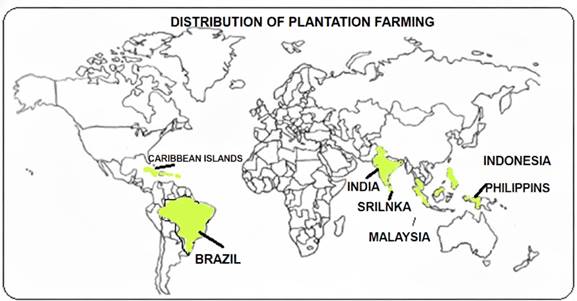
⑨ प्रदेश– मलेशिया, भारत व श्रीलंका, कॅरेबियन बेटे, ब्राझील, इंडोनेशिया, फिलीपिन्स, थायलंड, व्हिएतनाम इ. देशात मळयाची शेती केली जाते.

2) मासेमारी व प्राकृतिक घटक-
उत्तर-
मासेमारी हा मानवाचा प्राथमिक व्यवसाय असून तो प्राचीन काळापासून चालत आलेला आहे. मासेमारी घटक पुर्वी पुर्णपणे प्राकृतिक घटकांवर अवलंबुन होता. सुरवातीच्या काळात मासेमारीचा उद्देश उपजीविकेसाठीच होते. खालील मुद्दयांचे अनुशंगाने मासेमारी व्यवसाय प्राकृतीक घटकांशी कसा संमधीत आहे ते पाहू.
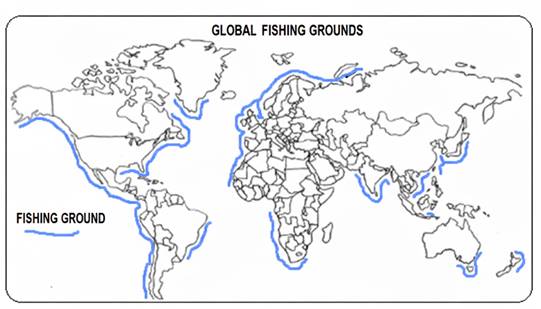
① भूखंड मंच व प्लवंक – समुद्राच्या जवळ सर्वसाधारणपणे दोनशे मीटर खोलीपर्यंत उधळ भागास भूखंड मंच असे म्हणतात. उथळ भूखंड मंचावर माशांचे आवडते खादय प्लवकांची निमिर्ती चांगली होत असते. त्यामुळे भूखंडमचांवर अन्नाच्या शोधात मासे आलेले असतात व तेथेच प्रजनन ही करतात त्यामुळे भूखंडमाचांवर माशांचे प्रमाण जास्त असते. त्यामुळे भूखंडमंचावर जगात सर्वाधिक मासेमारीस उपयुक्त स्थिती असते.
② सागरी किनाऱ्याचे स्वरूप – मासेमारी दुष्ट्रीने दंतुर समंद्र किनारे उपयुक्त असतात. मोठ्या प्रमाणात मासेमारी हे प्रामुख्याने दंतुर किनारा असणाऱ्या सागरी भागात होत असते. दंतुरकिनाऱ्या मुळे मासेमारी नौकाना वादळाच्या वेळी निसर्गत: सरंक्षण मिळते. दंतुर किनाऱ्यांवर किनाऱ्यावर समुद्र शांत असतो. मासे पकडण्याची आदर्श स्थिती असते. शिवाय दंतुर किनाऱ्यावर बंदरांचा विकास होऊन माशांची आयात व निर्यात सुलभ होते. दंतुर किनाऱ्यामुळे खाड्यांमधून व नद्यांच्या मुखाजवळ माशांचे अनेक प्रकार उपलब्ध होतात. किनारपट्टीच्या भूप्रदेशात अरण्य असतील तर मासेमारीसाठी उपयुक्त बोटी व जहाजे तयार करण्यासाठी आवश्यक असणाऱ्या लाकडाचा पुरवठा होतो. जर किनारपट्टीचा प्रदेश डोंगराळ, शेतीस निरुपयोगी असेल तर आपोआपच अशा भागातील लोक मासेमारीकडे वळतात.
③ उष्ण व शीत सागरी प्रवाहांचा संगम – समुद्र पृष्ठभागावरून उष्ण व थंड सागरी प्रवाह वाहत असतात. जेथे उष्ण व थंड सागरी प्रवाह एकत्र येऊन मिळतात. तेथील पाणी उबदार होउन तेथे माशांचे आवडते खादय प्लवक मोठया प्रमाणावर तयार होतात. त्यामुळे उष्ण व शीत सागरी प्रवाहांच्या संगमाचे क्षेत्र हे प्रमुख मत्स्य क्षेत्रे व प्रमुख व्यापारी मासेमारीची केंद्र बनलेले आहेत. तसेच भूभागावरुन अनेक नद्या समुद्रात गोडे पाणी व नत्रयुक्त पदार्थांची भर टाकतात. नत्रयुक्त पदार्थ माशांना आवश्यक असतात. अशा भागातही माशांचे उत्पादन जास्त होते. व तिथे ही मासेमारी मोठया प्रमाणात होत असते.
④ हवामान– i) सागर जलाचे तापमान 20 डिग्री सेल्सियस पेक्षा कमी असल्यास जलचर प्राण्यांची वाढ चांगली होते. मध्य कटिबंधीय हवामानातील सागर जल थंड असल्याने तेथे माशांचे अनेक प्रकार आढळतात.
ii) उष्ण कटिबंधीय प्रदेशातील उष्ण हवामानामुळे मासे जास्त काळ टिकत नाहीत, तर ते लवकर नाश पावतात. व या कटिबंधातील अतिशय उबदार सागर भागात आढळणारे मासे व्यापारी दृष्ट्या कमी महत्त्वाचे असतात.
iii) मध्य कटिबंधात हिवाळ्यातील नैसर्गिक बर्फाच्या पुरवठ्यामुळे मासे दीर्घकाळ टिकविता येतात.
⑤ स्थान – अक्षवृत्तीय स्थानाचा प्रभाव मासेमारीवर मोठ्या प्रमाणात पडत असतो. मासेमारीचा प्रदेश कोणत्या अक्षवृत्त्तात आहे. यावर तेथील हवामान, आढळून येणारे समुद्रप्रवाह ठरत असतात. जे मासेमारीला प्रभावित करतात.

- Prathamik Arthik Kriya Tipa Liha प्राथमिक आर्थिक क्रिया प्रकरणावरील टिपा लिहा
3) व्यापारी तत्वारील लाकूडतोड व्यवसाय
① वनांमध्ये चालणाऱ्या अनेक व्यवसायांपैकी लाकूडतोड हा महत्वाचा व्यवसाय आहे.
② विषुववृत्तीय प्रदेशात वनातील लाकूड हे टणक आहे व विषववृत्तीय वने घनदाट स्वरुपाचे आहेत, हवामान रोगट आहे, वाहतूक सुविधांचा अभाव प्राणी यामुळे या भागात व्यापारी तत्त्वावर लाकूडतोड व्यवसायाचा विकास झालेला नाही.
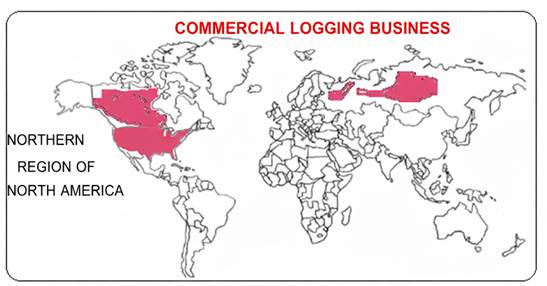
③ सूचीपर्णी अरण्याच्या प्रदेशात व समशीतोष्ण वनांच्या प्रदेशातील एकाच जातीचे वृक्ष विस्तृत क्षेत्रात उगवलेले असतात, उदा. पाईन, जुनिपर, सिडार, ओक, स्प्रुस, इ. हे वृक्ष सरळ, उंच वाढतात, लाकूड मऊ या लाकडाला अधिक मागणी आहे. त्यामुळे जगात व्यापारी तत्त्वावरील लाकूडतोड व्यवसायाचा विकास हा या प्रदेशात अधिक झालेला दिसून येतो.
या प्रदेशात यांत्रिक साधनांच्या साह्याने मोठ्या प्रमाणात वृक्षतोड केली जाते. तसेच लाकुड वाहतूक करण्यासाठी वाहतूक साधनांचाही विकास झाला आहे.
④ उष्ण कटीबंधीय पानझडी किंवा मोसमी हवामान प्रदेशातील वने विरळ असतात. या वनात साग, साल, शिसव, चंदन, खैर इ. वृक्ष आढळतात. या वनांच्या तळाशी अनेक झाडेझुडुपे उगवतात. ही वने दाट वस्तींच्या सानिध्यात असल्याने या वनांतील वृक्ष तोडून जमिनी शेतीखाली आणल्या जात आहे. त्या मुळे ही वने नष्ट होण्याची भिती निर्माण झालेली आहे.
⑤ जगात व्यापारी तत्त्वावरील लाकूडतोड व्यवसाय हा रशियातील सूचीपर्णी वनांचा प्रदेश या भागात अधिक विकसित झालेला आहे.
⑥ आज जगात लाकूड विविध कारणांसाठी अतिशय उपयुक्त असल्यामुळे प्रंचड प्रमाणावर व्यापारी तत्वावर लाकूडतोड केली जात आहे. त्यामुळे जगातील वनांचे प्रमाण कमी होत आहे.

4) शिकार व परिस्थेचा ऱ्हास –
① सुरवातीच्या काळात मानव अन्नांची गरज म्हणून शिकार करत होता. शिकार हो मानवाचा अतिप्राचीन व्यवसाय आहे.
② शिकारी पासुन मांस, हाडे, लोकर, कातडी, केस हस्तीदंत, सुगांधी कस्तुरी इ. घटक मिळविण्यासाठी शिकार केली जाते.
③ मात्र मानवाने आपल्या अन्नाची गरज, मनोरंजन व विविध वस्तूंची निर्मिती करण्यासाठी मोठ्या प्रमाणावर प्राण्यांची व पक्ष्यांची शिकार सुरु केली असुन तिला व्यवसायीक स्वरुप देखिल आलेले आहे.
④ या शिकारीमुळे पक्ष्यांचे व प्राण्यांचे अस्तित्व धोक्यात आलेले आहे. अनेक प्रजाती या नष्ट झालेले आहेत व काही प्रजाती या नष्ट होण्याच्या मार्गावर आहेत.
⑤ पर्यावरणामध्ये असणाऱ्या जैविक व अजैविक घटकांमधील समतोलाला महत्व आहे. पर्यावरणाच्या अस्तित्वासाठी मानव, प्राणी व पक्षी यांना अनन्यसाधारण असे महत्त्व आहे. शिकारीमुळे परिसंस्थेला धोका निर्माण झालेला आहे व परिसंस्थेचा ऱ्हास होण्याची शक्यता निर्माण झाली आहे
⑥ प्राण्यांच्या संरक्षण व संवर्धनासाठी नवनवीन कायदे केलेले आहेत त्यातुन शिकारीवर बंदी घालण्यात आलेली आहे.

अधिक वाचा
प्राथमिक आर्थिक क्रिया प्रकरणावरील भौगोलिक कारणे दया
मानवी वस्ती व भूमी उपयोजन फरक स्पष्ट करा.
मानवी वस्ती व भूमी उपयोजन दिर्घोत्तरी प्रश्न व उत्तरे
मानवी वस्ती व भूमी उपयोजन कारणे दया
मानवी वस्ती व भूमी उपयोजन वस्तूनिष्ठ प्रश्न objective Que.
बारावी भूगोल प्राथमिक आर्थिक क्रिया प्रकरणावरील टिपा लिहा
Prathamik Arthik Kriya Tipa Liha
English Medium
Prathamik Arthik Kriya Tipa Liha
Give Short Notes
1) Plantation Agriculture
Plantation agriculture is a type of farming practiced in tropical regions with dense forests, sparse population, and hilly terrain. It is carried out on large-sized farms using scientific methods under the guidance of agricultural experts. Heavy capital investment is involved, and a single crop suitable to the local geographical conditions is grown mainly for commercial and export purposes.
Characteristics:
- Large farm size – The size of farms is large, generally ranging from 40 to 400 hectares.
- Heavy capital investment – Large capital is required for infrastructure, plantation maintenance, and processing.
- Monoculture system – Only one crop is grown over the entire plantation, suitable to the regional conditions (e.g., tea plantations in India, coffee plantations in Brazil).
- Labour supply – Due to large farm size, plantation work is done mainly by local labourers.
- Scientific management – Scientific methods are used to maintain quality and meet global demand. Crops are properly processed and graded.
- Low per hectare yield but high per capita output – Though yield per hectare is low, overall production is high due to large land area.
- Long-term production – Plantation crops are perennial; once planted, production continues for 10–15 years.
- Major crops – Tea, coffee, rubber, cocoa, spices (Kerala), cashew plantations (Konkan region).
- Regions – Plantation agriculture is practiced in Malaysia, India, Sri Lanka, Caribbean Islands, Brazil, Indonesia, Philippines, Thailand, Vietnam, etc.
2) Fishing and Natural Factors
Fishing is a primary occupation of humans and has existed since ancient times. Earlier, fishing was completely dependent on natural factors and was mainly carried out for subsistence. The relationship between fishing and natural factors is explained below:
- Continental Shelf and Plankton
The shallow sea region up to about 200 meters depth near the coast is called the continental shelf. Plankton, the main food of fish, grows abundantly in shallow waters. Hence, fish gather and breed here, making continental shelves the most productive fishing grounds in the world. - Nature of the Coastline
Indented (irregular) coastlines are ideal for fishing. They provide natural shelter to fishing boats during storms. Seas near indented coasts are relatively calm, creating ideal fishing conditions. Such coasts support the development of harbours, facilitating fish trade. Estuaries and creeks near indented coasts support a variety of fish species. Forested coastal areas also provide timber for making fishing boats. In rocky or infertile coastal regions, people naturally turn to fishing as a livelihood. - Confluence of Warm and Cold Ocean Currents
Where warm and cold ocean currents meet, plankton develops in large quantities. Such regions become major fishing grounds and centres of commercial fishing. Rivers flowing into seas bring fresh water and nitrogen-rich materials, further increasing fish production. - Climate
i) When sea water temperature is below 20°C, aquatic life thrives better; hence mid-latitude regions have rich fish diversity.
ii) In tropical regions, high temperatures cause fish to spoil quickly, and fish found there are often less important commercially.
iii) In temperate regions, natural ice available during winter helps preserve fish for a longer period. - Latitudinal Location
Latitude affects climate and ocean currents, which directly influence fishing activity. Hence, fishing regions are strongly affected by their latitudinal position.
3) Commercial Logging (Timber Cutting on Commercial Basis)
- Among the various forest-based occupations, logging (timber cutting) is an important activity.
- In the equatorial regions, forest wood is very hard, forests are extremely dense, the climate is unhealthy, transportation facilities are poor, and wild animals are abundant. Due to these factors, commercial logging has not developed in equatorial regions.
- In the coniferous and temperate forest regions, trees of the same species grow over vast areas, such as pine, juniper, cedar, oak, and spruce. These trees grow straight and tall, and their wood is soft and in high demand. Hence, commercial logging has developed extensively in these regions.
Large-scale tree cutting is carried out using modern machinery, and well-developed transport facilities are available for timber transportation. - Tropical deciduous or monsoon forests are comparatively sparse. Trees like teak, sal, shisham, sandalwood, and khair are found here. Dense undergrowth exists at the forest floor. As these forests are located near densely populated areas, large-scale deforestation is taking place to bring land under agriculture. Therefore, these forests are under threat of destruction.
- On a global scale, commercial logging is most highly developed in the coniferous forest regions of Russia.
- Today, wood is widely used for various purposes, leading to large-scale commercial logging. As a result, forest cover across the world is rapidly declining.
4) Hunting and Environmental Degradation
- In the early stages of human civilization, hunting was carried out mainly to satisfy food requirements. Hunting is one of the most ancient human occupations.
- Hunting is done to obtain meat, bones, wool, skin, hair, ivory, and fragrant musk.
- Over time, humans started hunting animals and birds on a large scale for food, entertainment, and for manufacturing various products. Hunting gradually assumed a commercial form.
- Due to excessive hunting, the existence of many animal and bird species has been threatened. Several species have already become extinct, while many others are on the verge of extinction.
- The balance between biotic and abiotic components of the environment is essential for ecological stability. Humans, animals, and birds play a vital role in maintaining the ecosystem. Hunting has disturbed this balance and has led to environmental degradation.
- To protect and conserve wildlife, several laws have been enacted, and as a result, hunting has been banned in many parts of the world.
5) Shifting Cultivation (July 2024)
Shifting cultivation is a primitive form of agriculture. It represents the earliest attempt by humans to grow food crops. This type of farming still exists today in its original form in various parts of the world.
Due to large-scale soil erosion, land degradation, destruction of valuable forest resources, adverse effects on wildlife, the requirement of heavy human labour, and low productivity, this type of agriculture is also known as “destructive agriculture.”
Characteristics of Shifting Cultivation:
- In this type of farming, forest land is selected for cultivation. It is mainly practiced on mountain slopes and forested regions.
- Forests are cleared and burnt, and the remaining ash is mixed with the soil as manure.
- The size of farms is small, generally 0.5 to 1 hectare, and fields are scattered.
- Traditional tools such as sticks and spades are used for agricultural work.
- All farming operations are carried out manually.
- The period during which land is cultivated is short, while the fallow period is long.
- Agricultural production is insufficient to meet basic needs; therefore, hunting, fishing, and collection of forest fruits and tubers are practiced as subsidiary occupations.
Distribution:
Shifting cultivation is found in equatorial forest regions, Southeast Asia, Central and South America, and Africa.
6) Intensive Subsistence Farming (March 2022)
Farming that is practiced intensively for the subsistence of the farmer and his family is known as intensive subsistence farming. This type of agriculture is mainly found in countries where the population is high and the area of cultivable land is limited.
Characteristics:
- Small Size of Farms
Farms are small and depend mainly on monsoon rainfall. Suitable land is brought under cultivation and land is rarely kept fallow. Due to dense population, per capita land availability is low, and land value is high. - Production of Food Crops
Crop cultivation depends on rainfall. This farming mainly produces food grains.- Rice is grown in high rainfall regions.
- Bajra, jowar, maize, etc., are grown in low rainfall regions.
Rice is the principal crop, along with wheat, maize, jowar, bajra, gram, cotton, vegetables, and fruits.
- Abundant Labour Supply
Due to dense population, labour is cheap and easily available. Most agricultural activities are performed manually by labourers. - Use of Animals for Tillage
Animals such as bullocks and buffaloes are used along with human labour. Careful ploughing, use of manure, crop rotation, and cultivation of fallow land are practiced. - Traditional Methods of Farming
This farming is mostly traditional. With limited capital and traditional tools, farmers attempt to obtain maximum yield per hectare through intensive labour. - Limited Use of Improved Seeds and Chemical Fertilizers
Hybrid seeds and chemical fertilizers are used sparingly. - Limited Use of Machinery
Due to small landholdings, machinery cannot be widely used. Traditional and outdated tools are common, though limited modern techniques are gradually being adopted. - Other Crops
Along with food grains, crops like groundnut, sugarcane, oilseeds, and cotton are also grown. - High Labour and Capital Input
As landholdings are small, greater labour and capital are invested to increase production. - Artificial Irrigation Facilities
Artificial irrigation and fertilizers are used to enhance productivity. Multiple cropping is practiced.
At present, improved seeds, chemical fertilizers, modern irrigation methods, and limited mechanization have helped increase agricultural output.
Regions:
This type of farming is practiced in India, China, Japan, Malaysia, Sri Lanka, Pakistan, and Bangladesh.
बारावी भूगोलातील महत्वाच्या लिंक असलेली PDF डाऊनलोड करा


[…] Prathamik Arthik Kriya Tipa Liha […]
[…] Prathamik Arthik Kriya Tipa Liha […]
[…] Prathamik Arthik Kriya Tipa Liha […]
[…] Prathamik Arthik Kriya Tipa Liha […]
[…] Prathamik Arthik Kriya Tipa Liha […]
[…] Prathamik Arthik Kriya Tipa Liha […]